Working together across state lines to promote public safety and create better outcomes.

Public Safety
Our Mission.
Shared Responsibility
Our Commitment.
Better Outcomes
Our measure of success.

"Public Safety. Shared Responsibility. Better Outcomes, reflects how the Compact has evolved: from establishing a national framework to strengthening how states collaborate, make decisions, and achieve better results."
Mac Pevey
Mac Pevey (WA)

"The Compact’s strength is its collaboration across states, willingness to engage, and shared commitment to doing this work well. "
Ashley Lippert
Ashley Lippert
Click on the state to view data.
Use the Incoming/Outgoing toggle at the top of the map to view each state’s total individuals on compact supervision at the close of FY2026. Shading indicates the relative number of transfers, with darker shading indicates a higher transfer volume.
This chart displays the number of active compact cases in each state at the close of FY2026, categorized by supervision type. Use the sorting tab at the top of the chart to view state totals.
In 2026, the Commission welcomed Sandra “Sandy” Hunt as the Ex Officio representative for the National Organization for Victim Assistance (NOVA), bringing decades of victim advocacy experience and perspective to the work of ICAOS.
Sandy currently serves as NOVA’s Senior Director of Operations and previously spent 33 years with the Montgomery County Prosecutor’s Office Victim/Witness Division in Dayton, Ohio, including 13 years as Director. Throughout her career, she worked closely with victims of violent crime, specializing in domestic violence, sexual assault, homicide survivor services, crisis response, post-conviction and parole matters, and trauma-informed practices.
Victim perspectives are an important part of the Compact’s work. Interstate movement, supervision decisions, victim notification, and communication all have real impacts on victims and their families. Sandy’s involvement helps ensure those perspectives remain part of the conversation as states navigate supervision, policy, and operational decisions under the Compact.
Since joining ICAOS, Sandy has already helped bring greater focus to victim concerns within the Compact process, reminding us that behind every case are real people impacted by the decisions states make. As the Compact continues to evolve, partnerships like this ensure victim perspectives remain thoughtfully and meaningfully included in the Commission’s work.

After rule amendments, proposed by the workgroup, were adopted in 2025, the workgroup shifted its attention to the broader issue states continued to raise: how do we make better and more consistent decisions surrounding violations and retaking?
At its best, the rulemaking process reflects both the operational realities states face and the collaborative spirit of the Commission;
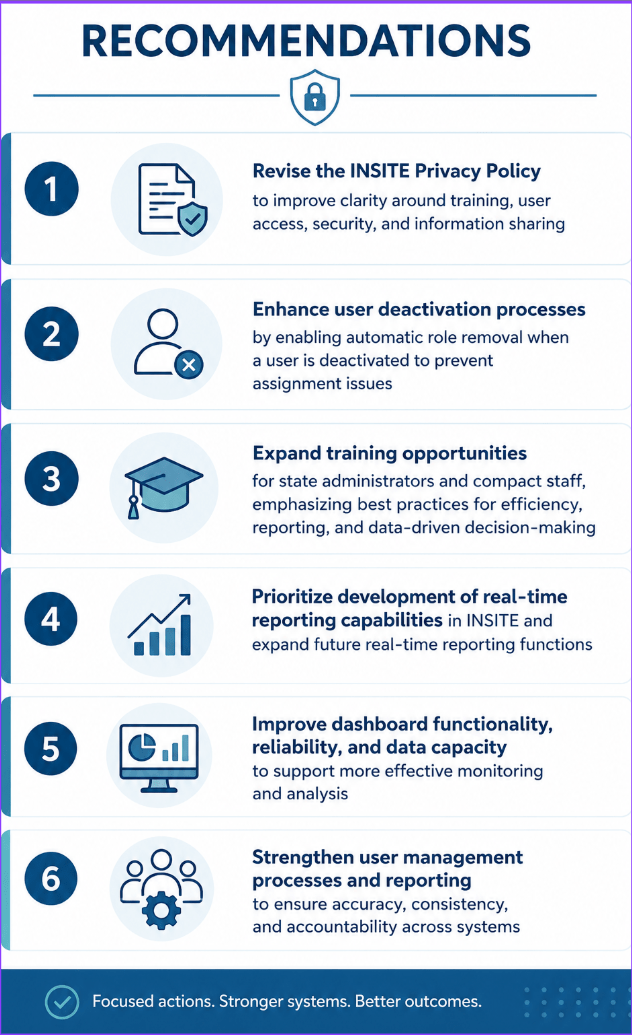
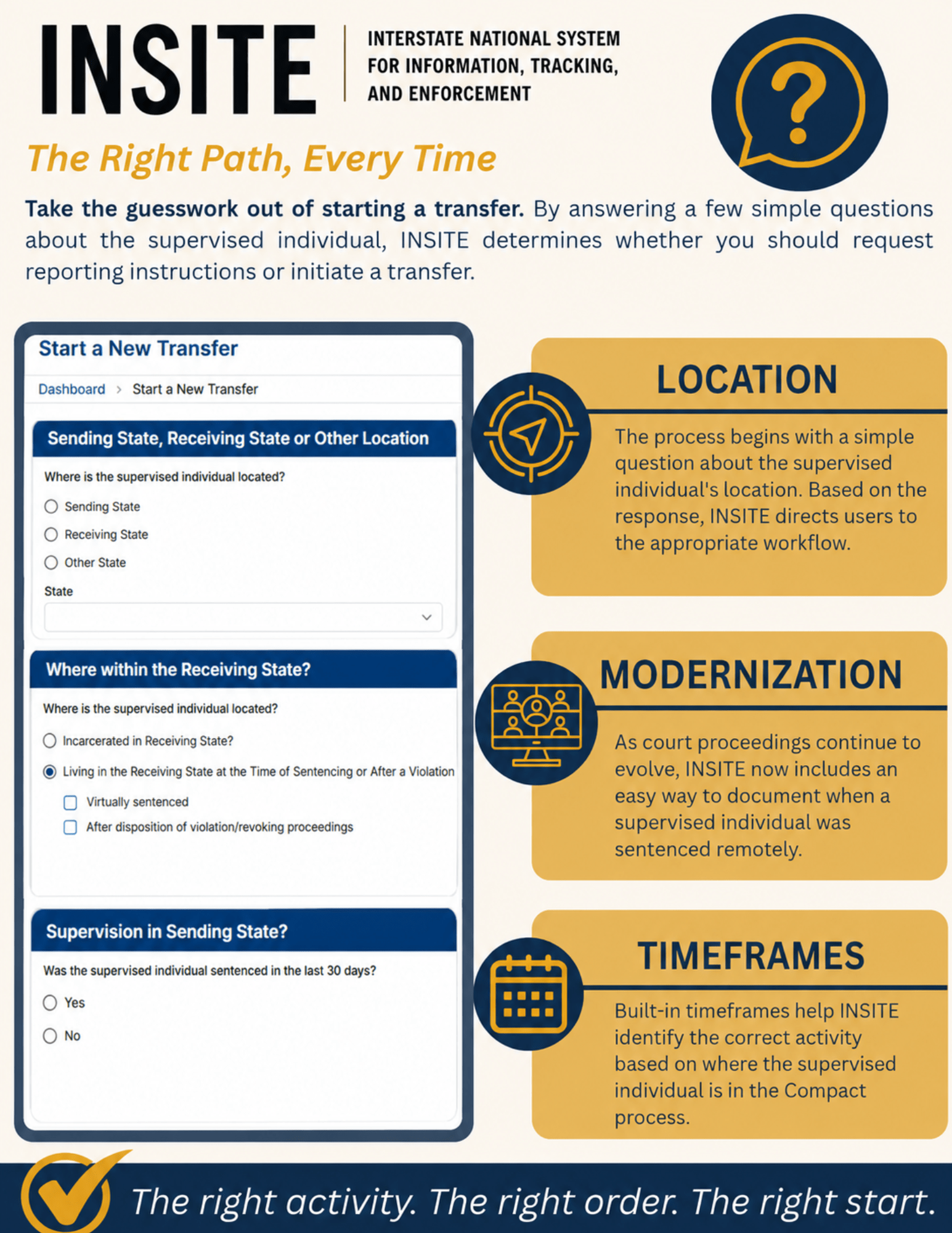
INSITE positions the Commission to better support future operational needs, reporting, security expectations, and enhancements.
The committee’s approach remains proactive rather than reactive by identifying issues early, addressing concerns before they escalate, and helping states succeed before problems become larger compliance matters
The real work begins when states put rule changes into practice; updating training materials, answering questions, developing guidance, and making sure everyone was working from the same playbook.
It was an honor for Puerto Rico to host Commissioners, Deputy Compact Administrators, Ex Officio members, and partners from across the country to share the island’s culture, hospitality, and commitment to the work of ICAOS.
As a DCA, I was focused primarily on how changes affected my own state operationally. Now, I have the opportunity to work with states across the country, hear different perspectives, and help identify ways we can better support implementation, training, and communication nationally.

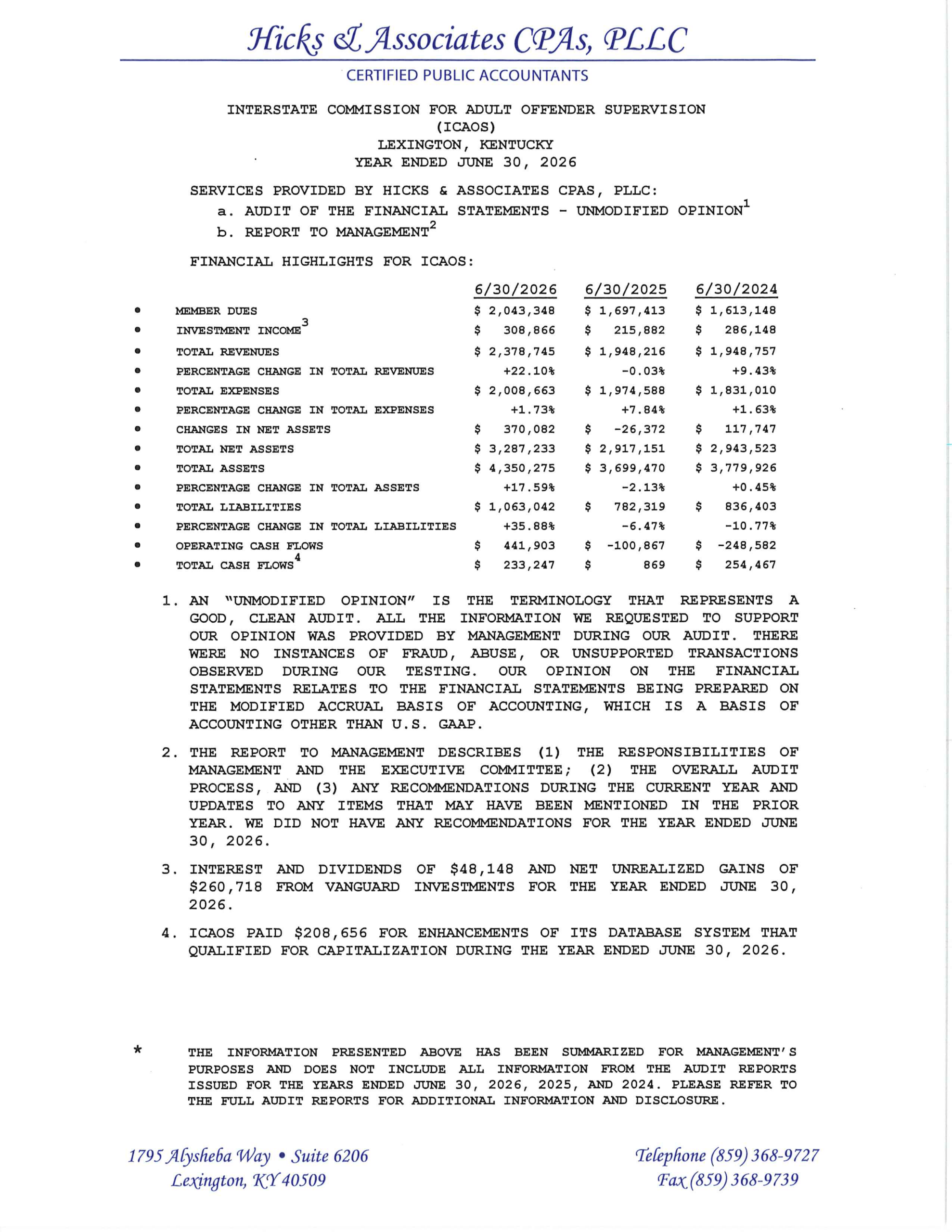
"The Commission remains financially healthy, investing in critical priorities, maintaining strong reserves, and positioning itself well for the future."
Gary Roberge
Gary Roberge (CT)
Executive Committee Chair
This past year has been one of meaningful progress for the Commission. Marked not only by what we accomplished, but by how we came together to move the Compact forward.
Across our work, one theme stood out: a willingness to take a hard look at where we are, challenge long-standing practices, and embrace change. That mindset positioned ICAOS to meet the demands of today’s supervision landscape and better demonstrate the impact of our work across states.
Among the most significant milestones this year was the adoption of a new tagline: Public Safety. Shared Responsibility. Better Outcomes. More than a change in language, it reflects how the Compact has evolved. Moving beyond establishing a national framework to strengthening how states collaborate, make decisions, and achieve results.
We also advanced one of the most important areas of our work: how we respond to violations and approach retaking decisions. The development of the violation response tool brings evidence-based practices into Compact decision-making, helping states evaluate both risk and stability. This approach supports more informed, consistent, and outcome-focused decisions, aligning our processes with how supervision is practiced in the field today.
At the same time, we continued to invest in the systems that support this work. Progress toward a fully modernized national data system reflects years of thoughtful planning and collaboration. While the launch of a redesigned website improves access to resources, training, and communication for states. These are not just technology upgrades; they are practical improvements that make the Compact easier to navigate and more effective in practice.
None of these accomplishments happened in isolation. They reflect the dedication, expertise, and engagement of Commissioners, Deputy Compact Administrators, committee members, the National Office, and staff across the country. Your willingness to lean into change, ask hard questions, and work collaboratively with transparency continues to move this Compact forward.
As we look ahead, the work before us is just as important. The focus now turns to implementation and bringing these efforts to life in a way that is meaningful and sustainable. This next phase will require the same level of partnership and leadership that defined this past year. These efforts are not an endpoint, but a continuation of our work to advance as a Commission.
I am proud of what we have accomplished together, and even more proud to work alongside a group so committed to advancing our shared mission.
ICAOS Executive Director
We often describe the Commission’s work in terms of progress, and this past year certainly reflects that. But that progress was possible only because of our shared commitment to moving forward together.
Across the Commission, we have taken on complex work: examining processes, challenging assumptions, and offering solutions that better align the Compact with broader corrections practices. This work has required time, collaboration, meaningful input, and a shared commitment to change.
What stands out most is not any single accomplishment, but the way we approached the work. Commissioners, Deputy Compact Administrators, committee members, and staff contributed their perspectives, asked difficult questions, and worked through issues with thoughtful decision making. That engagement is what sustains the Compact.
This year’s efforts have laid important groundwork, from advancing a more structured approach to violation response, to preparing for a modernized national system, to refining how we communicate our purpose and impact. Every change reflects a Commission that is evolving.
The work ahead is equally important. Implementation will require continued coordination, communication, and support across states. It will take the same level of partnership that has brought us to this point, along with a shared duty to carry these efforts forward in practice.
The strength of the Compact has always been its members. Collaboration across states, a willingness to engage, and a commitment to doing this work well are what make progress possible.
Thank you for your continued dedication and leadership. It is a privilege to support this work and to serve alongside each of you.
Risk Needs Responsivity Workgroup Chair
For years, states have raised concerns about violations and retaking under the Compact. The overall impact retaking decisions have on supervision outcomes continued to surface in trainings, ABM discussions, surveys, and committee conversations. Simply put, states were telling the Commission this was one of the hardest parts of the Compact to navigate. The 2022 University of Cincinnati Corrections Institute (UCCI) assessment reinforced many of those concerns.
The RNR Workgroup began by focusing on areas where states were struggling operationally, particularly with documentation, communication, and absconder cases. After rule amendments addressing those issues were adopted in 2025, the workgroup shifted its attention to the broader issue states continued to raise: how do we make better and more consistent decisions surrounding violations and retaking?
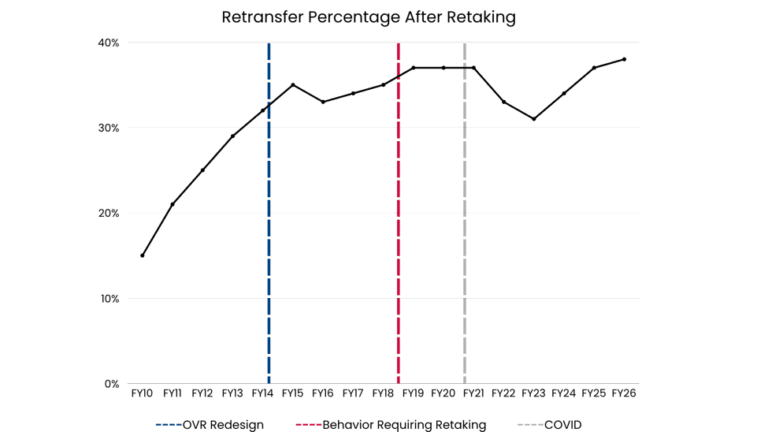
One of the things the workgroup kept coming back to was the data showing that many retakings ultimately resulted in retransfers back to the receiving state. In many cases, individuals were being removed from housing, employment, treatment, and support systems only to later return to the same jurisdiction for supervision again. At the same time, states reported they often lacked a structured way to evaluate whether retaking was truly the best response or whether other interventions may better support long-term supervision success and public safety.
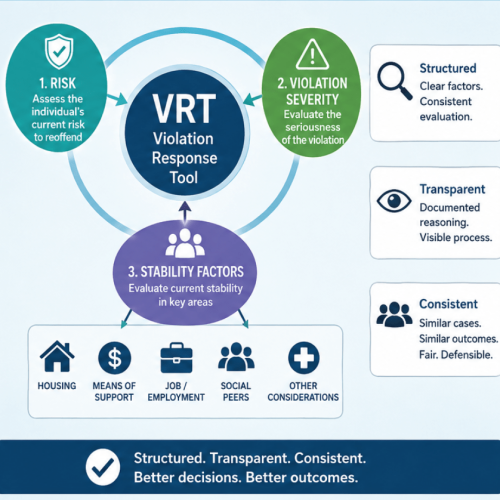
That work ultimately led to development of the Violation Response Tool (VRT), a structured decision-making framework to help states evaluate violations more consistently and thoughtfully. The tool asks states to look at three core areas: the severity of the violation, the individual’s risk level, and stability factors such as housing, employment, treatment, and compliance history. The goal is not to eliminate retaking or remove state discretion, but to provide a more transparent and evidence-informed process for evaluating violations.
This year, the workgroup launched a six-month pilot with nine states using real Compact cases to test the tool and provide feedback. The pilot generated valuable discussion and helped refine both the tool and the proposed rule language supporting its use. If adopted, the amendments would formally incorporate the Violation Response Tool into the Compact process.
This work has involved difficult conversations and differing perspectives, but the workgroup remains focused on the same question that started this effort: how can the Commission better support consistent decision-making, public safety, and successful supervision outcomes across states?
Rules Committee Chair
The Rules Committee advanced a robust slate of work in support of the Risk-Need-Responsivity (RNR) initiative, including 19 amendments approved at the 2025 Annual Business Meeting designed to strengthen alignment with evidence-based practices and improve supervision outcomes across member states. The Committee also reviewed and advanced four additional proposals to be considered at the 2026 Annual Business Meeting, reflecting continued attention to clarifying and refining the Compact’s rules to support consistent implementation.
One of the Committee’s biggest priorities this year was creating more opportunities for states to engage in the rulemaking process earlier and more openly. In addition to enhancing the public comment process, the Committee introduced new town hall discussions and expanded virtual engagement opportunities to give members a chance to ask questions, talk through operational impacts, and hear different perspectives before proposals come forward for vote.
Those conversations have become an important part of the process. Rather than rules simply appearing for consideration at the Annual Business Meeting, the Committee has worked to create more opportunities for collaboration, discussion, and feedback throughout development. The goal is not just clearer rules, but better implementation and a stronger understanding of how proposed changes may affect states operationally.
Looking ahead, the Committee will continue focusing on clarity, consistency, and practical application of the rules while encouraging meaningful discussion across jurisdictions and stakeholder groups. At its best, the rulemaking process reflects both the operational realities states face and the collaborative spirit of the Commission.
Technology Committee Chair
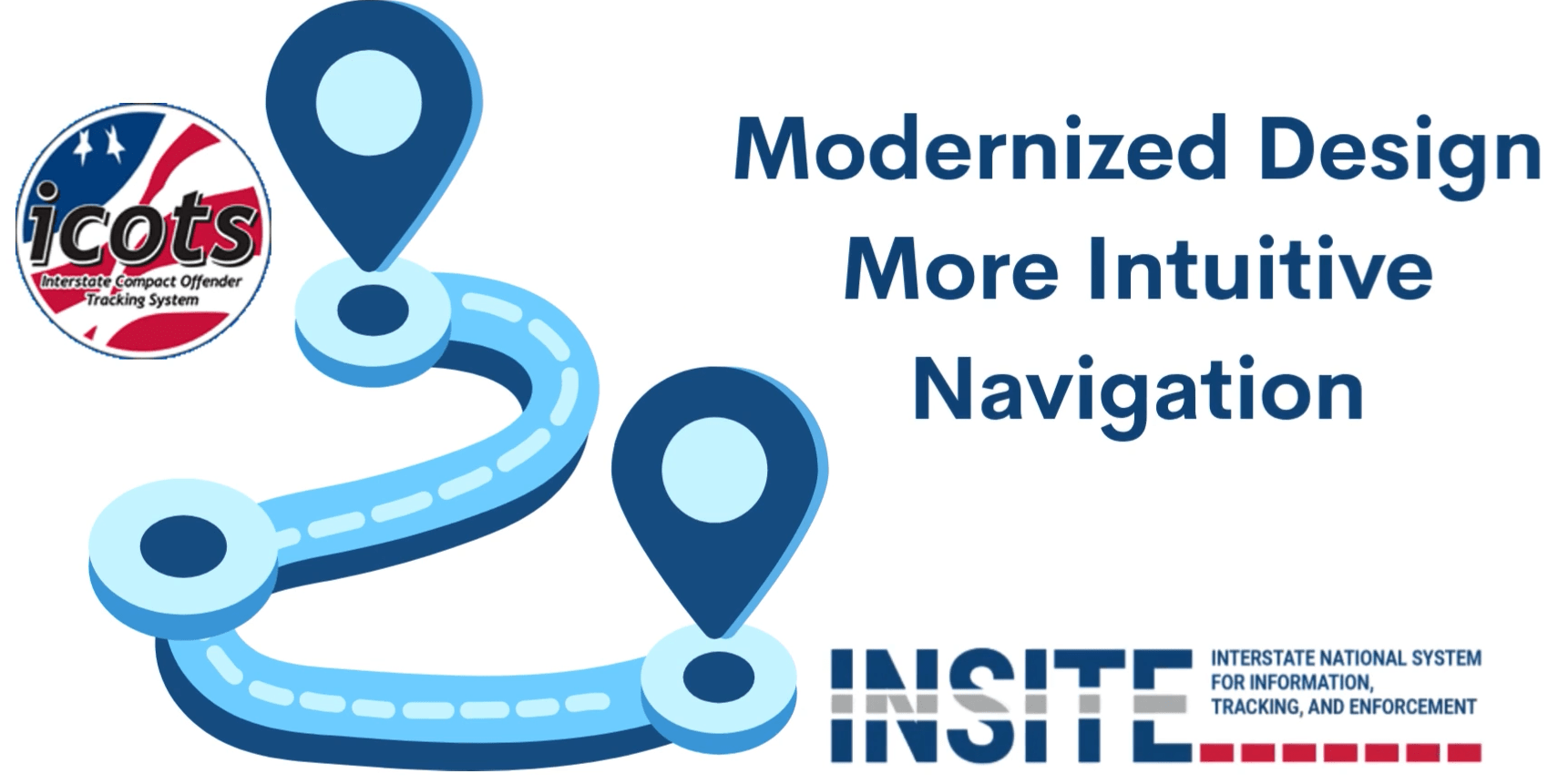
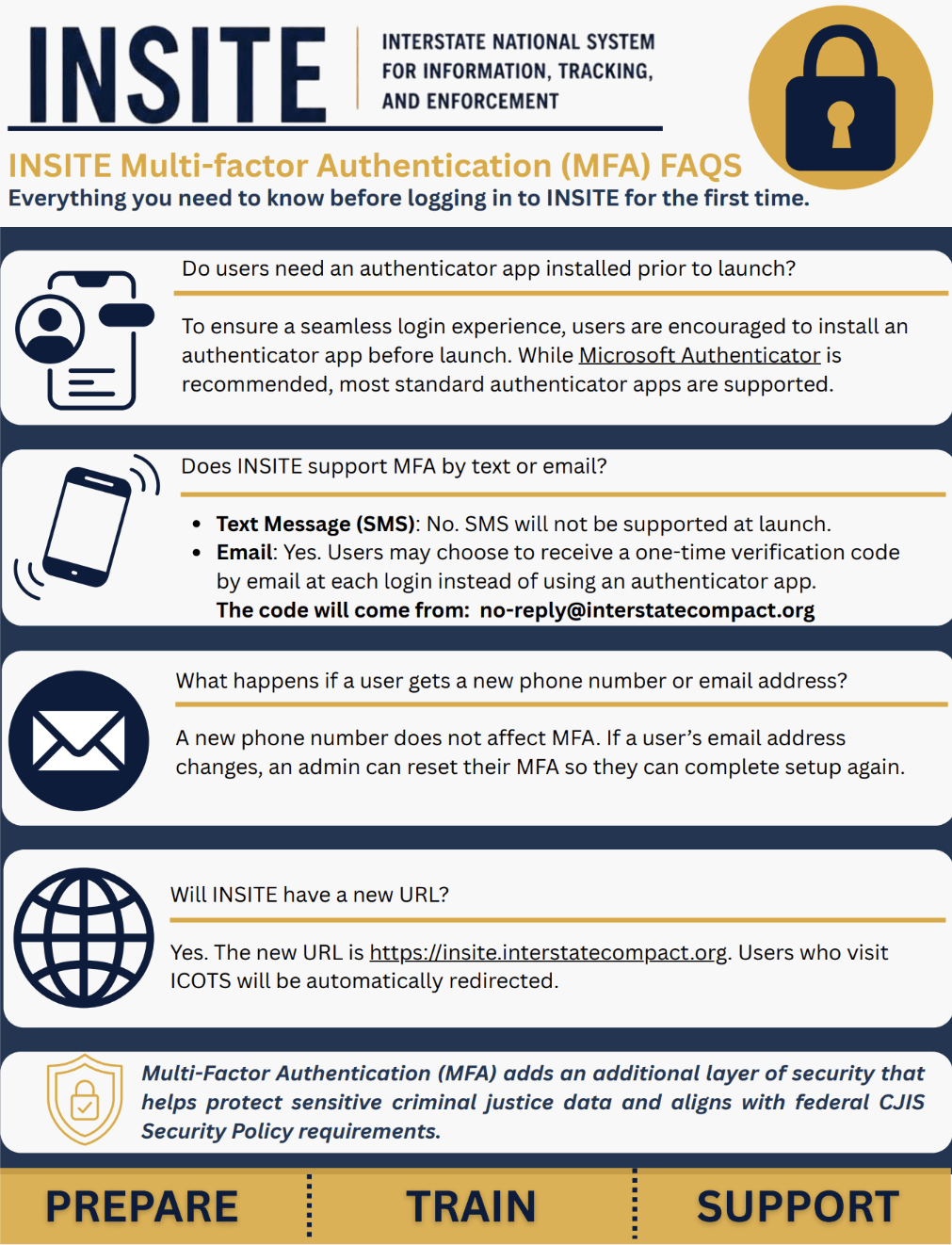
After nearly 20 years, ICOTS is finally getting a major upgrade.
When ICOTS launched in 2008, it completely changed how states managed interstate supervision. At the time, it was a huge step forward for the Compact. But technology, and the work states do every day, has changed a lot since then. INSITE is the Commission’s effort to modernize the system while keeping the core functions states rely on intact.
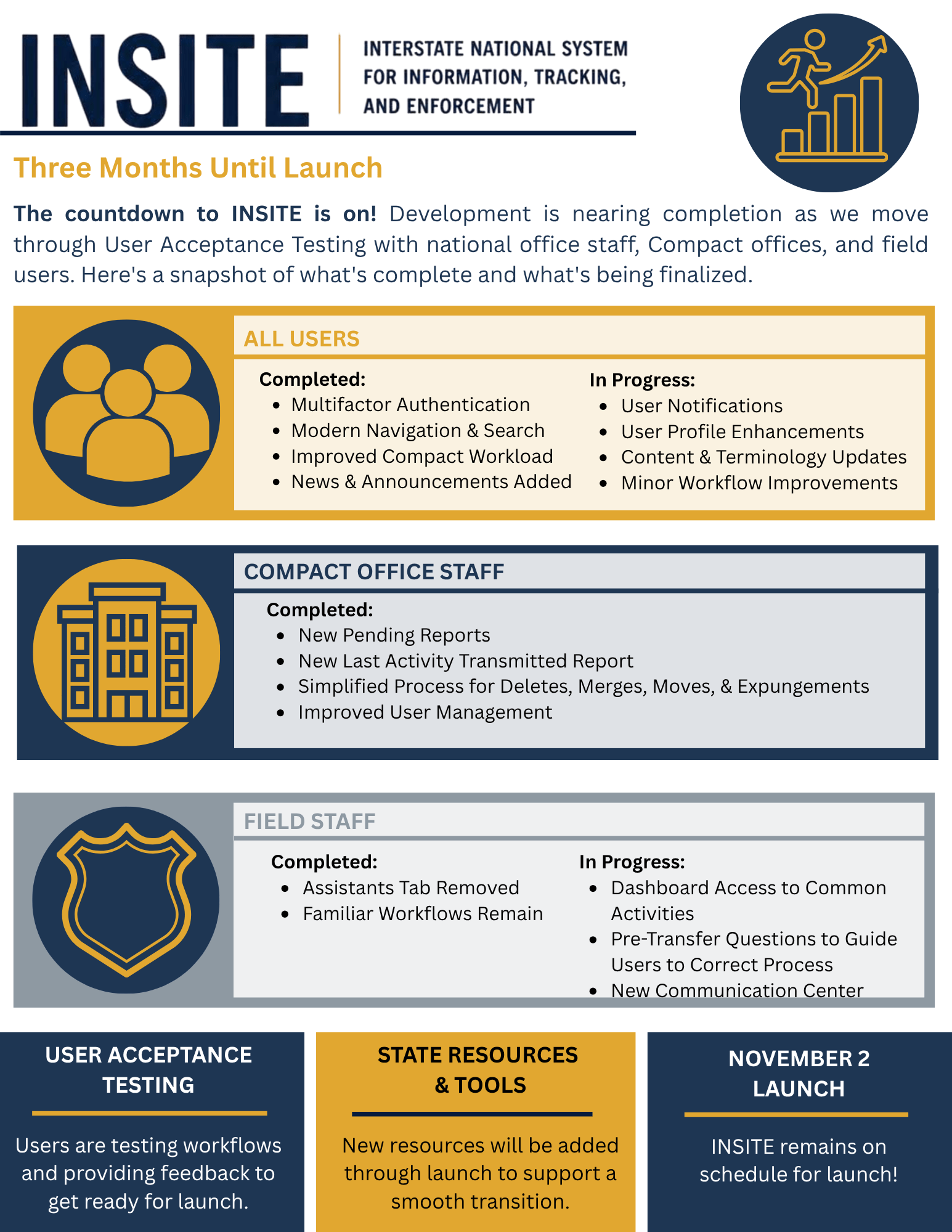
One of the biggest goals of the project has been to avoid reinventing the wheel. For most users, the overall workflow and day-to-day functions will feel familiar. States will still process cases, submit actions, communicate, and manage supervision in many of the same ways they do now. The difference is that INSITE is being built on a much more modern platform that gives the Commission greater flexibility, stability, and room to improve the system moving forward.
This upgrade is also about long-term sustainability. Maintaining and enhancing a system originally built almost two decades ago was becoming increasingly difficult. INSITE positions the Commission to better support future operational needs, reporting, security expectations, and enhancements.
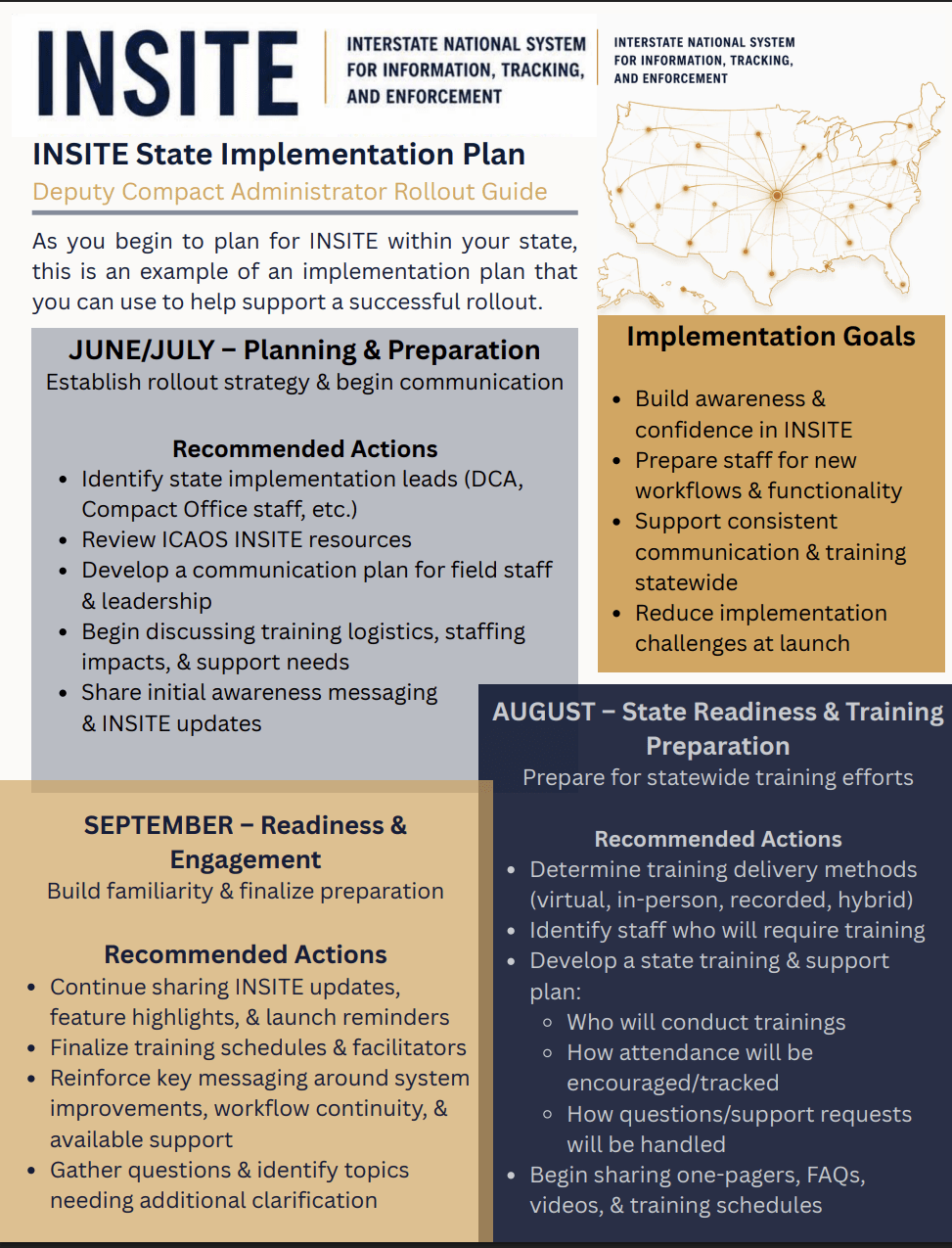
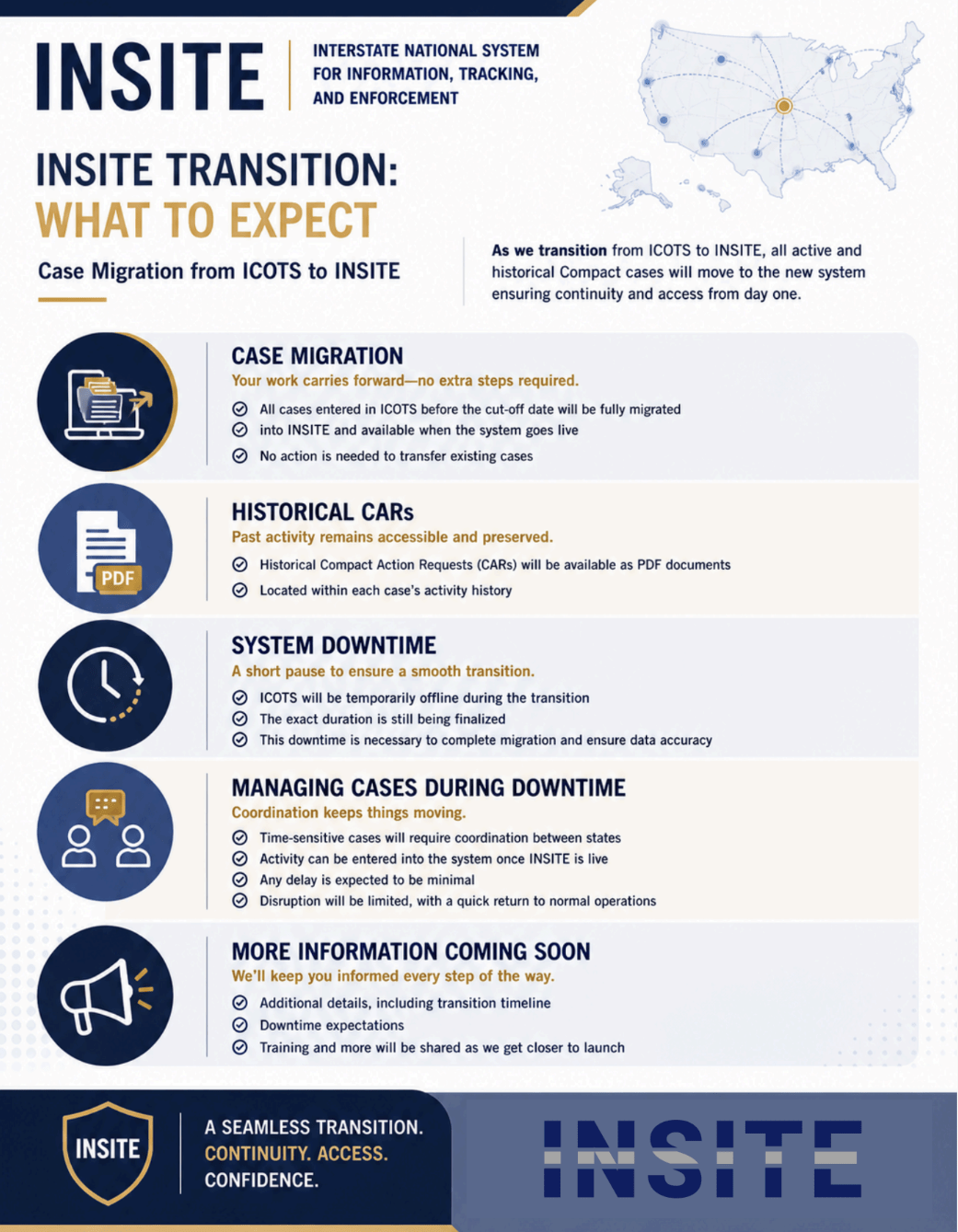
The project team is in the final stages of testing, refinement, and implementation planning as we get closer to the November 2 launch. A major focus over the coming months will be training. While INSITE should feel familiar overall, there will still be changes users need to learn and understand before go-live. The Commission will be rolling out training opportunities, support materials, and implementation guidance to help make the transition as smooth as possible for states.
Like any major system transition, there will be a short period where ICOTS will temporarily go offline during migration. The team is working to keep that downtime as limited as possible and will continue sharing details with states as timelines are finalized.
A lot of work has gone into getting the Commission to this point, and the project team continues working closely with states to make sure INSITE launches successfully and supports Compact operations.
Compliance Committee Chair
The Compliance Committee spent this year focused on making expectations clearer, improving accountability, and addressing issues that directly impact how states operate day to day under the Compact.
One of the committee’s biggest projects was developing a consolidated Compliance and Code of Conduct policy, which will be presented at the 2026 Annual Business Meeting as a proposed bylaw amendment. The goal was simple, streamline the compliance process, reduce confusion, and create clearer expectations for Commissioners and Deputy Compact Administrators when issues arise. Rather than having standards and procedures spread across multiple documents, the committee worked to pull everything into one practical framework.
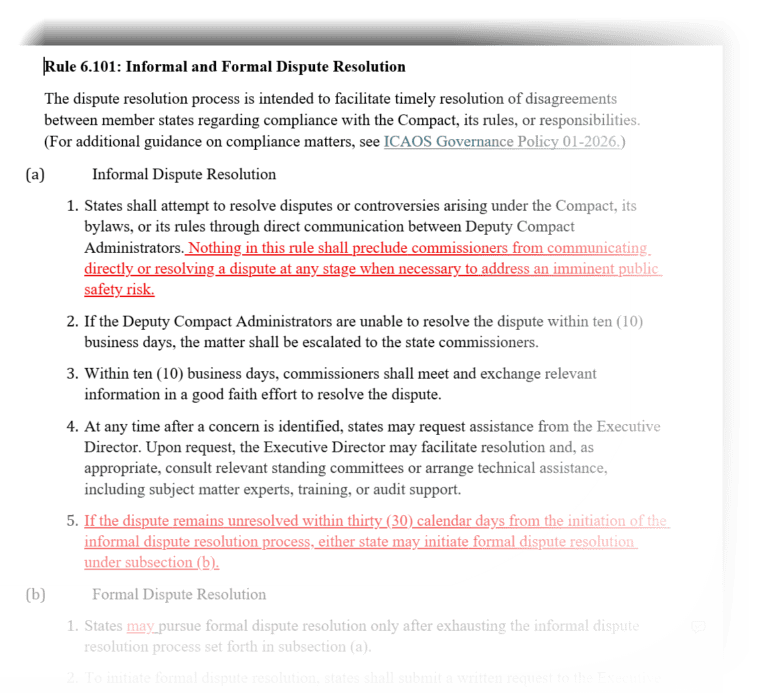
The committee also began taking a hard look at Chapter 6 of the ICAOS rules. Like many areas of the Compact, these rules have been in place for years, prompting the committee to identify opportunities to improve efficiency through greater clarity and consistency.
Quarterly compliance monitoring continued throughout the year, but the focus was not just identifying problems. The committee spent more time working directly with states experiencing challenges to address issues early and help prevent larger compliance concerns down the road.
| Compliance Standard | FY 2022 | FY 2023 | FY 2024 | FY 2025 | FY 2026 |
|---|---|---|---|---|---|
| Case Closure Notices | 95.90% | 96.20% | 96.30% | 96.30% | 96.80% |
| Case Closure Replies | 91.80% | 91.50% | 92.70% | 92.60% | 93.30% |
| Requested Progress Reports | 90.10% | 91.70% | 92.20% | 91.60% | 91.90% |
| Violation Responses | 88.20% | 87.90% | 90.60% | 89.50% | 90.50% |
| Transfer Request Replies | 93.40% | 94.30% | 95.50% | 95.10% | 95.60% |
| RFRI Replies | 97.40% | 97.00% | 97.30% | 97.60% | 97.20% |
| Transfer Acceptance Rate | 80.20% | 80.00% | 79.90% | 80.10% | 79.70% |
Another major focus this year was the ICOTS and Dashboard user audit. This audit gave the committee and Commission a much clearer picture of how states are using its systems, where operational gaps exist, and where improvements are needed particularly as the Commission prepares for the launch of INSITE. The findings helped shape policy changes, operational improvements, and system expectations moving forward.
Recognizing the amount of change and implementation work currently underway across the Compact, the committee does not anticipate conducting a formal audit in FY27. Instead, the focus will shift toward supporting states as they implement rule changes and train their staff on INSITE.
At its core, the committee’s goal is to keep the Compact operationally strong by ensuring it is consistently applied across the country. More importantly, the committee’s approach remains proactive rather than reactive by identifying issues early, addressing concerns before they escalate, and helping states succeed before problems become larger compliance matters.
Training, Education & PR Committee Chair
The Training, Education & Public Relations Committee spent much of this year focused on one simple goal: making sure states had the tools, information, and support they needed to successfully implement the 19 rule amendments adopted at the 2025 Annual Business Meeting.
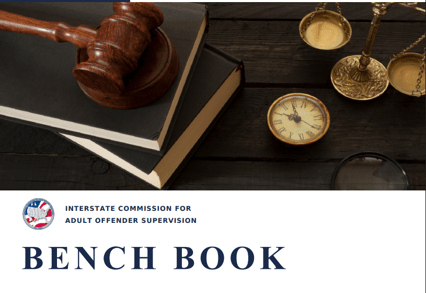
Anyone who has worked in this field knows that passing a rule is the easy part. The real work begins when states put those changes into practice. That meant updating training materials, answering questions, developing guidance, and making sure everyone was working from the same playbook. The committee devoted significant attention to the new absconder provisions and probable cause hearing requirements, revising nearly every major ICAOS resource in the process, including the Benchbook, Advisory Opinions, Hearing Officer’s Guide, whitepapers, policies, quick reference guides, and training modules.
The good news? Since implementation on April 1, states have experienced very few issues. That speaks to the tremendous effort put in by committee members, National Office staff, and the many Compact members who participated in training and provided feedback.
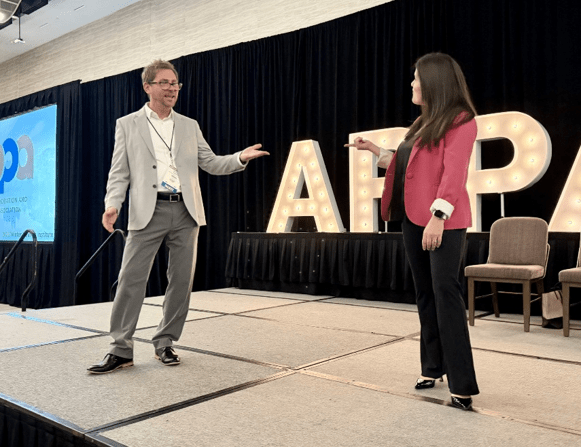
The committee also looked beyond the Compact community to build awareness and strengthen partnerships. Members represented ICAOS at national conferences, sharing information about recent rule changes, interstate supervision, and the role the Compact plays in supporting successful outcomes. Whether presenting to probation and parole professionals, extradition officials, judges, or other stakeholders, these conversations help ensure people understand not just what the Compact does, but why it matters.
State engagement remained a major priority as well. More than 200 participants joined the Building and Leveraging a Successful State Council webinar hosted by Florida, which highlighted practical strategies for strengthening state councils and building partnerships. Additional sessions explored topics ranging from Compact operations to transitional housing and reentry, giving members opportunities to learn from one another and discuss challenges they face in their own jurisdictions.
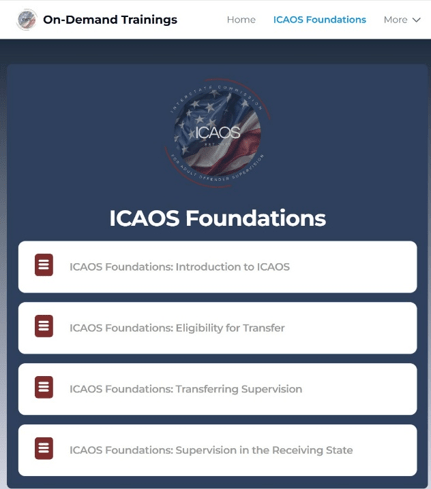
Behind the scenes, the committee also helped oversee the transition to a new learning management system , ensuring the Commission could continue meeting growing demand for online training. Each month, more than 6,500 Compact professionals engage with ICAOS training—strengthening consistency, expanding knowledge, and supporting effective implementation of the rules.
Most Viewed Training
Good training is not measured by the number of courses offered, but by whether people can use what they learn. That is why the committee exists, to help states turn policy into practice and ensure the Compact is applied consistently across the country.
Commission Vice Chair
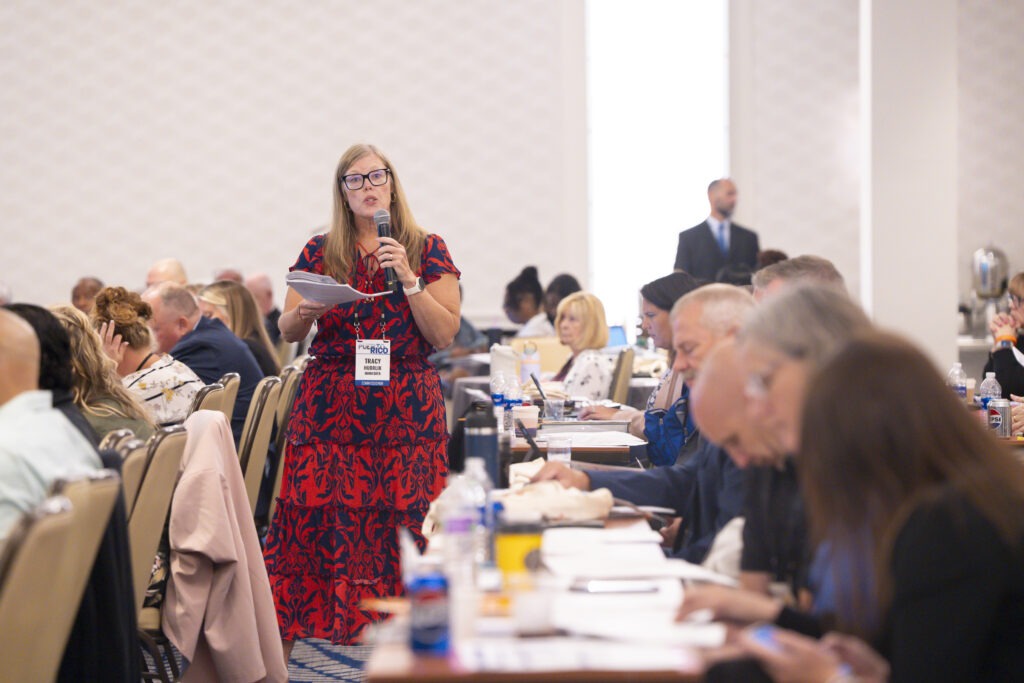
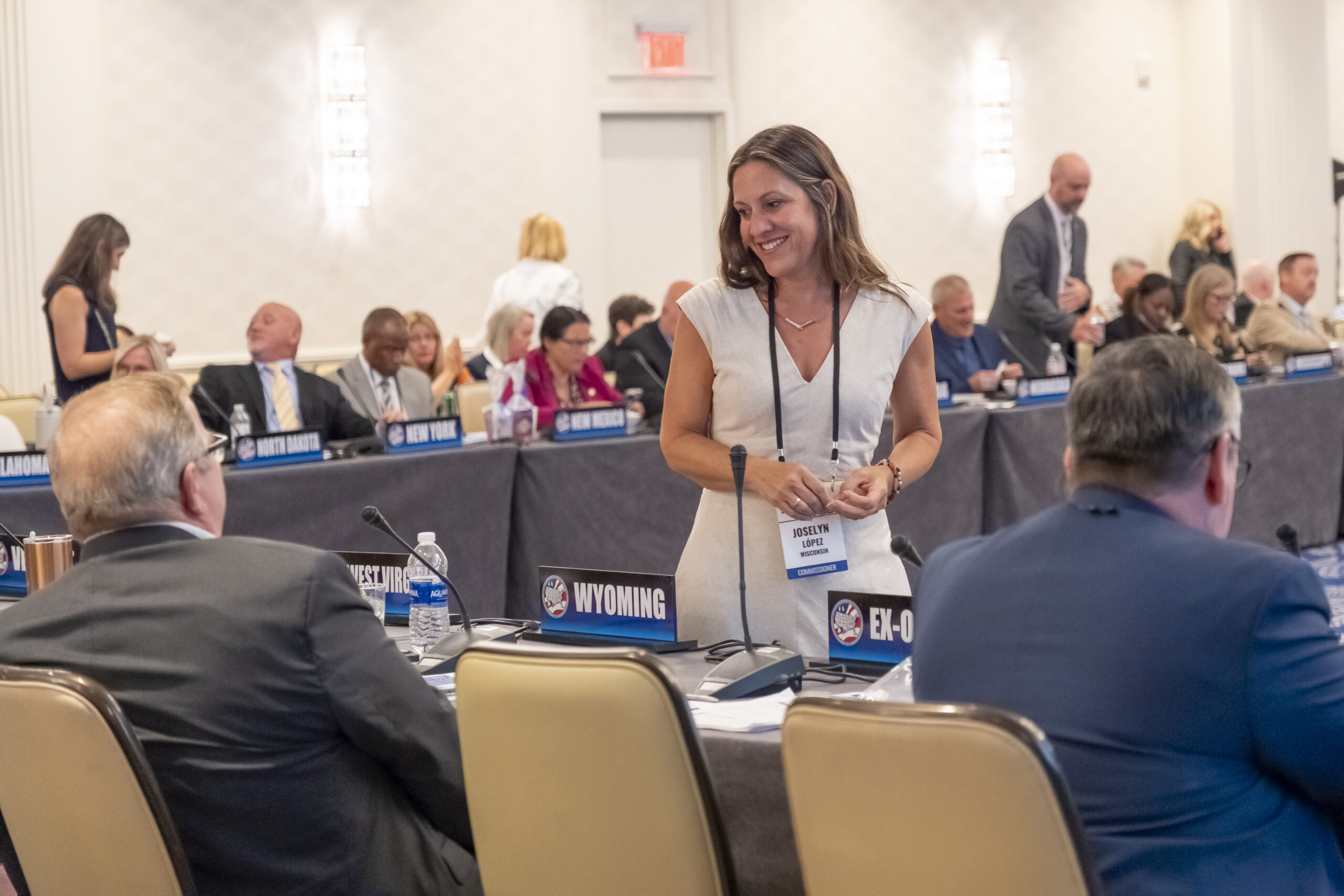
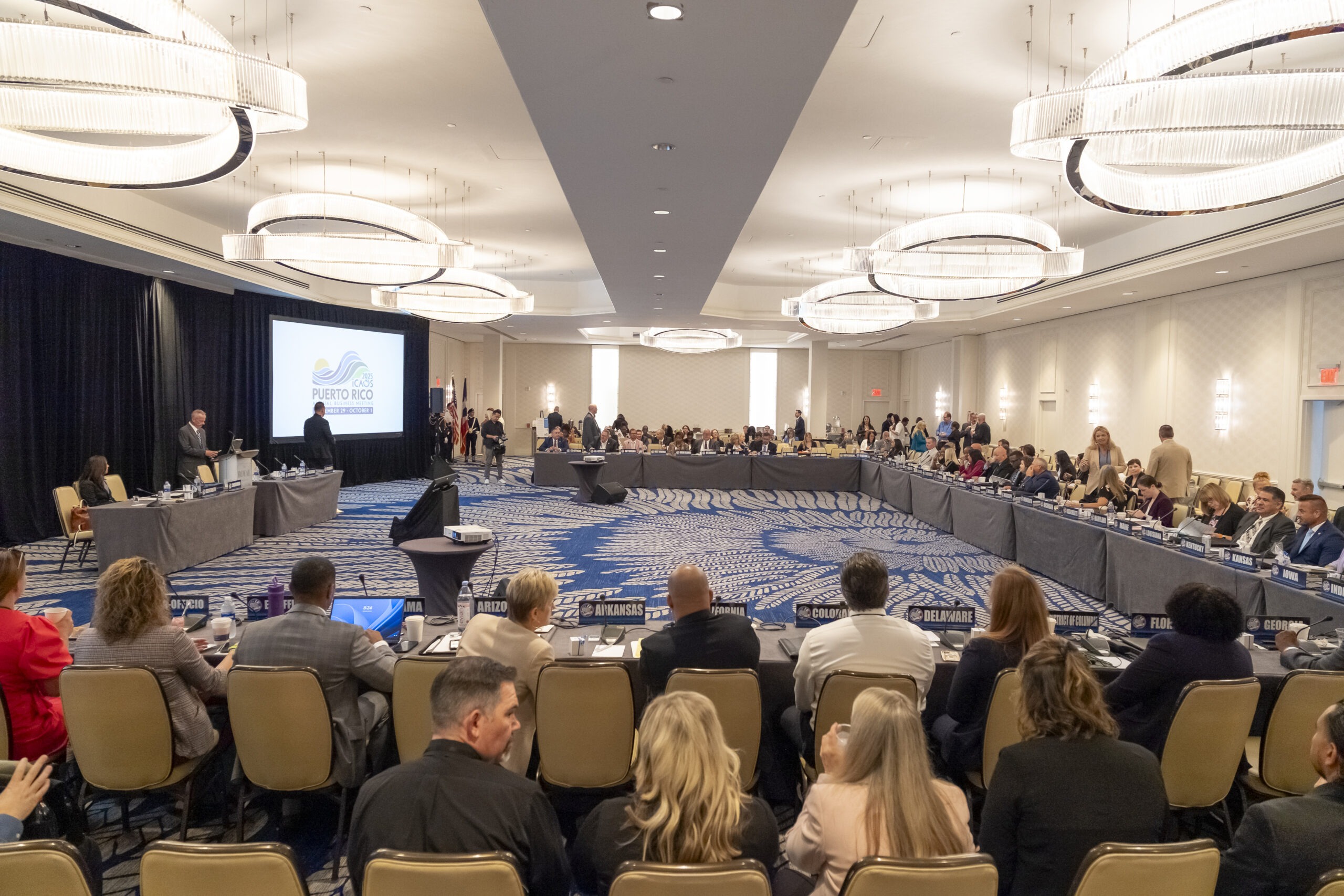
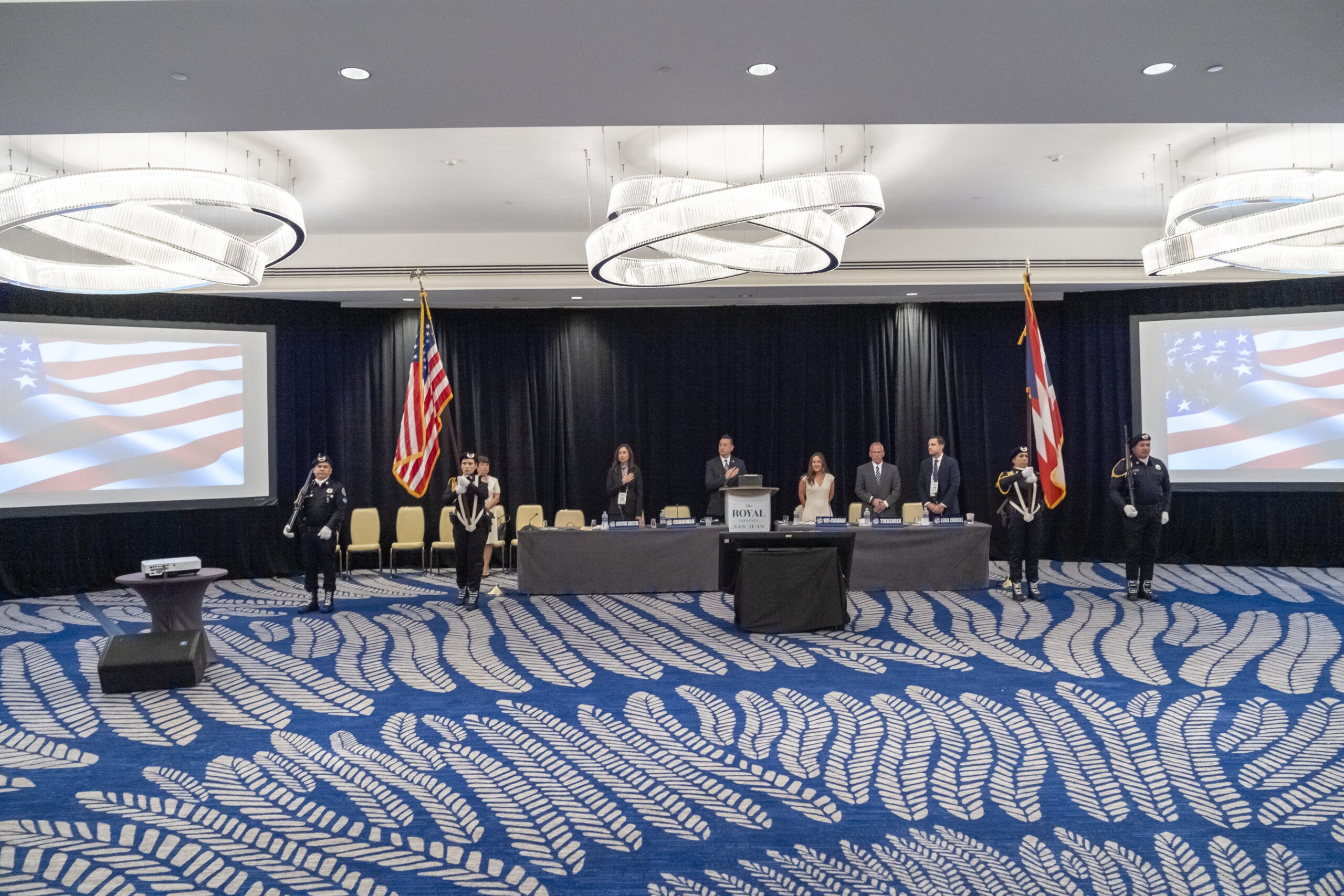
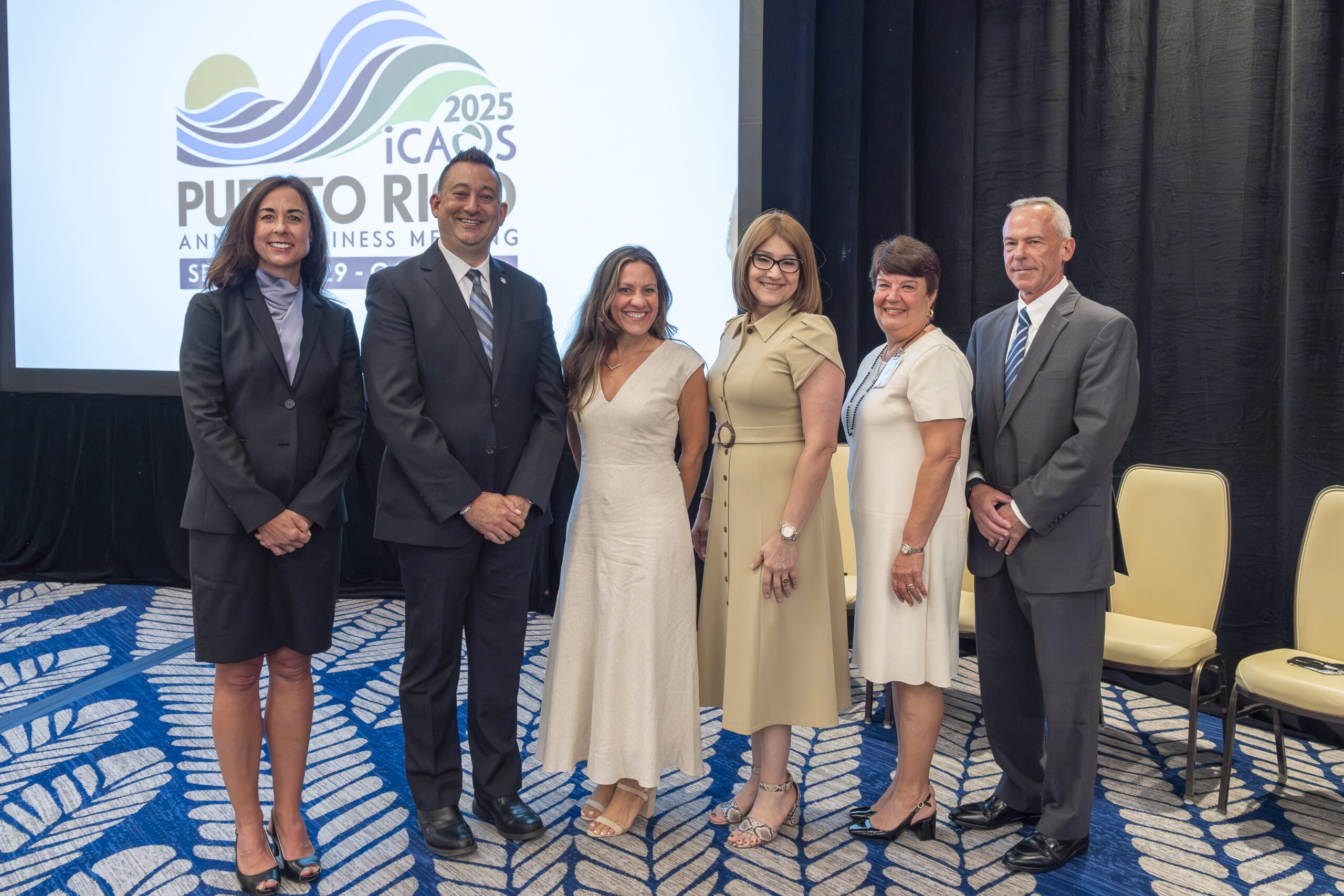
The 2025 Annual Business Meeting brought the Compact community together in beautiful San Juan, Puerto Rico, for a week of collaboration, discussion, and connection. It was an honor for Puerto Rico to host Commissioners, Deputy Compact Administrators, Ex Officio members, and partners from across the country to share the island’s culture, hospitality, and commitment to the work of ICAOS.
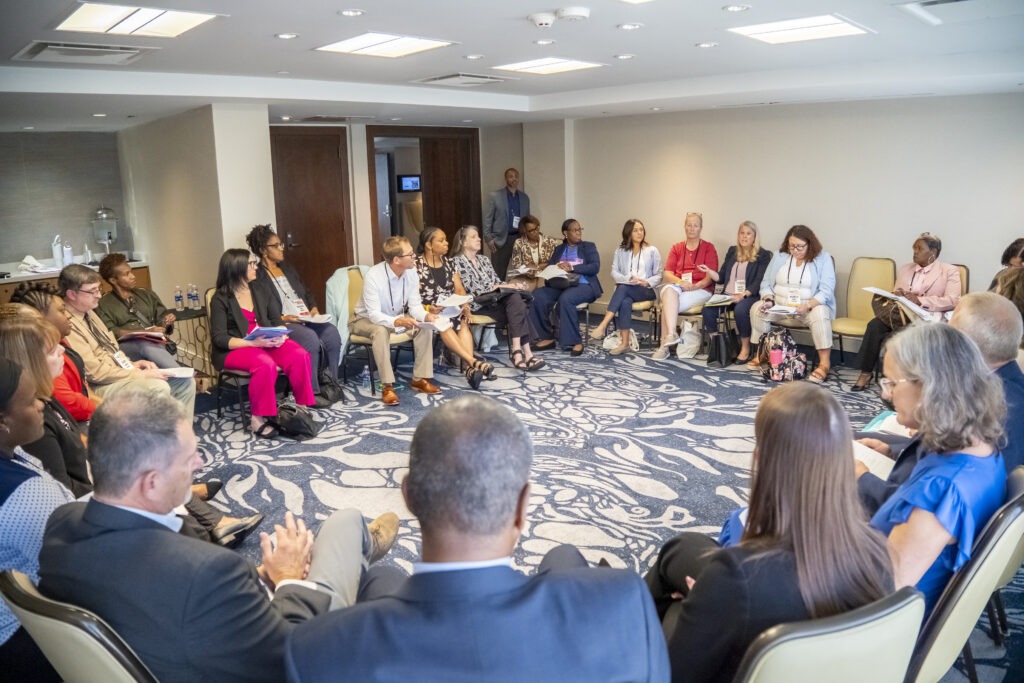
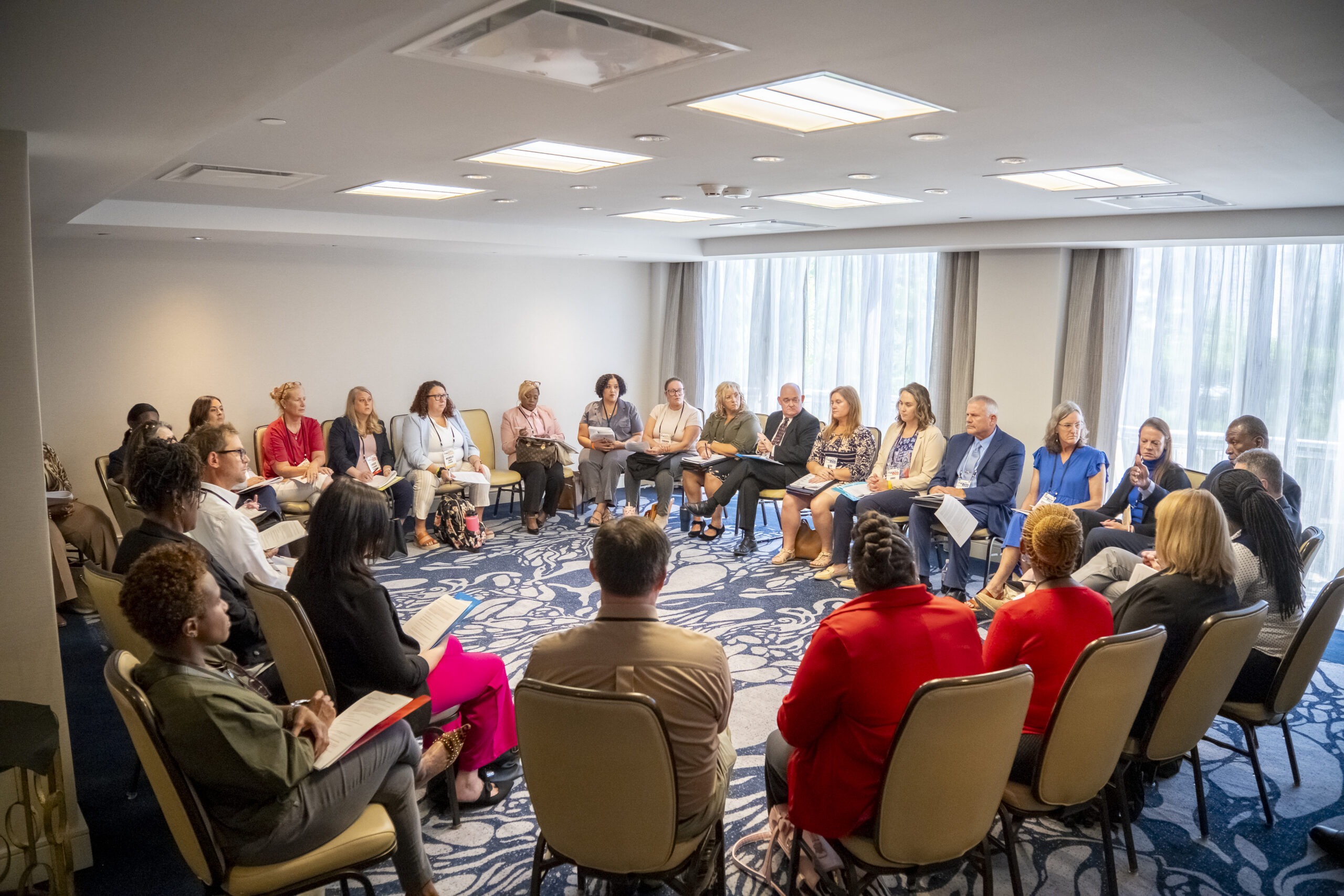
Throughout the week, members conducted the official business of the Commission, including approving the FY27 budget and voting on 20 proposed rule amendments, 19 of which were adopted. Attendees also participated in breakout sessions, town hall discussions, and presentations addressing emerging issues, operational challenges, and evolving practices in community supervision.
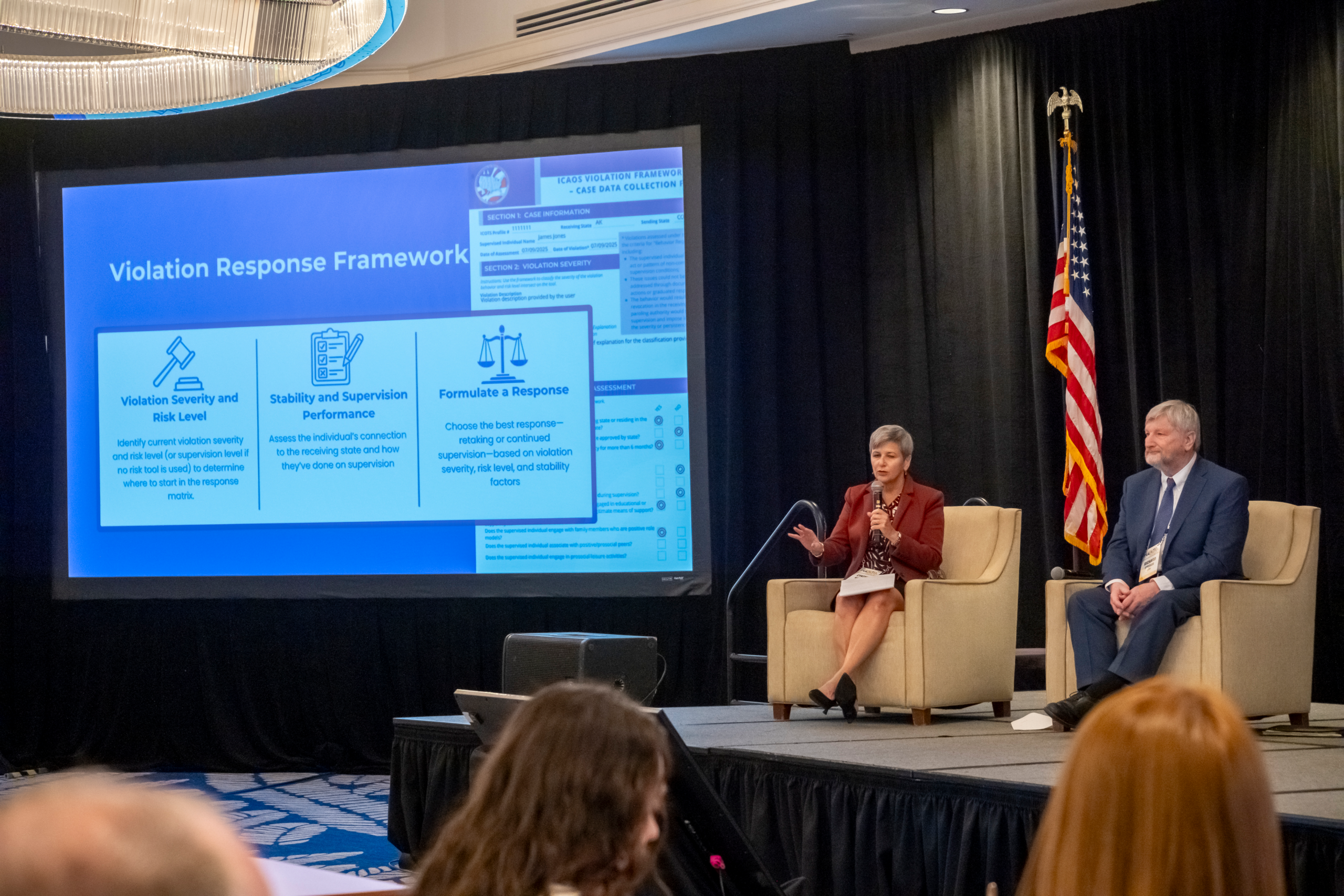
One of the most anticipated discussions centered on the proposed violation response framework presented by the RNR Workgroup and the Center for Effective Public Policy. The framework introduces a research-informed approach to violation and retaking decisions by evaluating violation severity, stability factors, and risk level to support fair, consistent, and transparent decision-making under the Compact. The discussion reflected the Commission’s continued commitment to improving outcomes and aligning practices with evidence-based supervision principles.
Attendees also heard from Marie Cruz Brownell, Chief of the Inmate Classification Office with the Puerto Rico Department of Corrections, who shared insight into how community supervision is managed across the island. Commissioners elected new Region Chairs who will guide communication, collaboration, and implementation efforts within their regions over the next term.
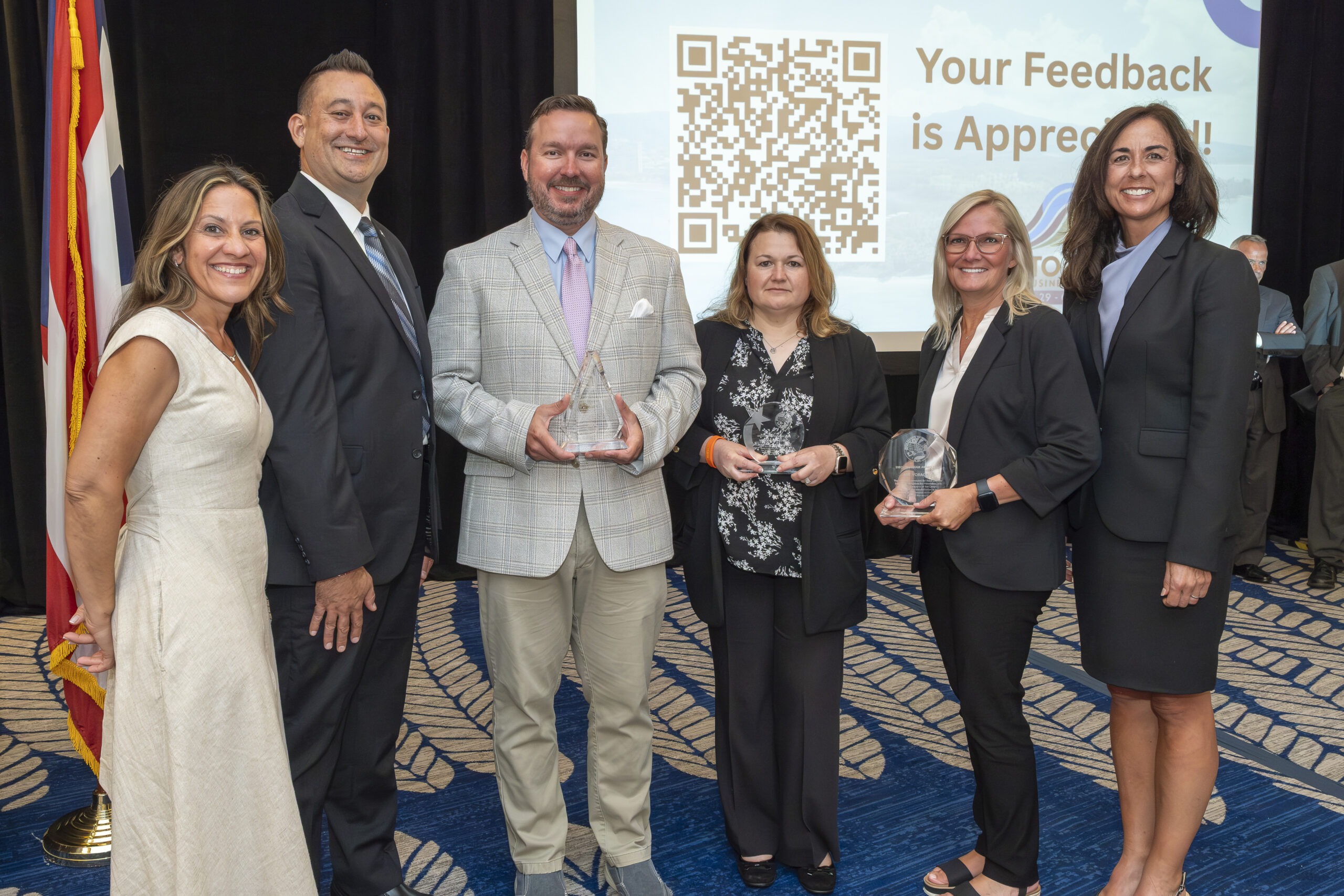
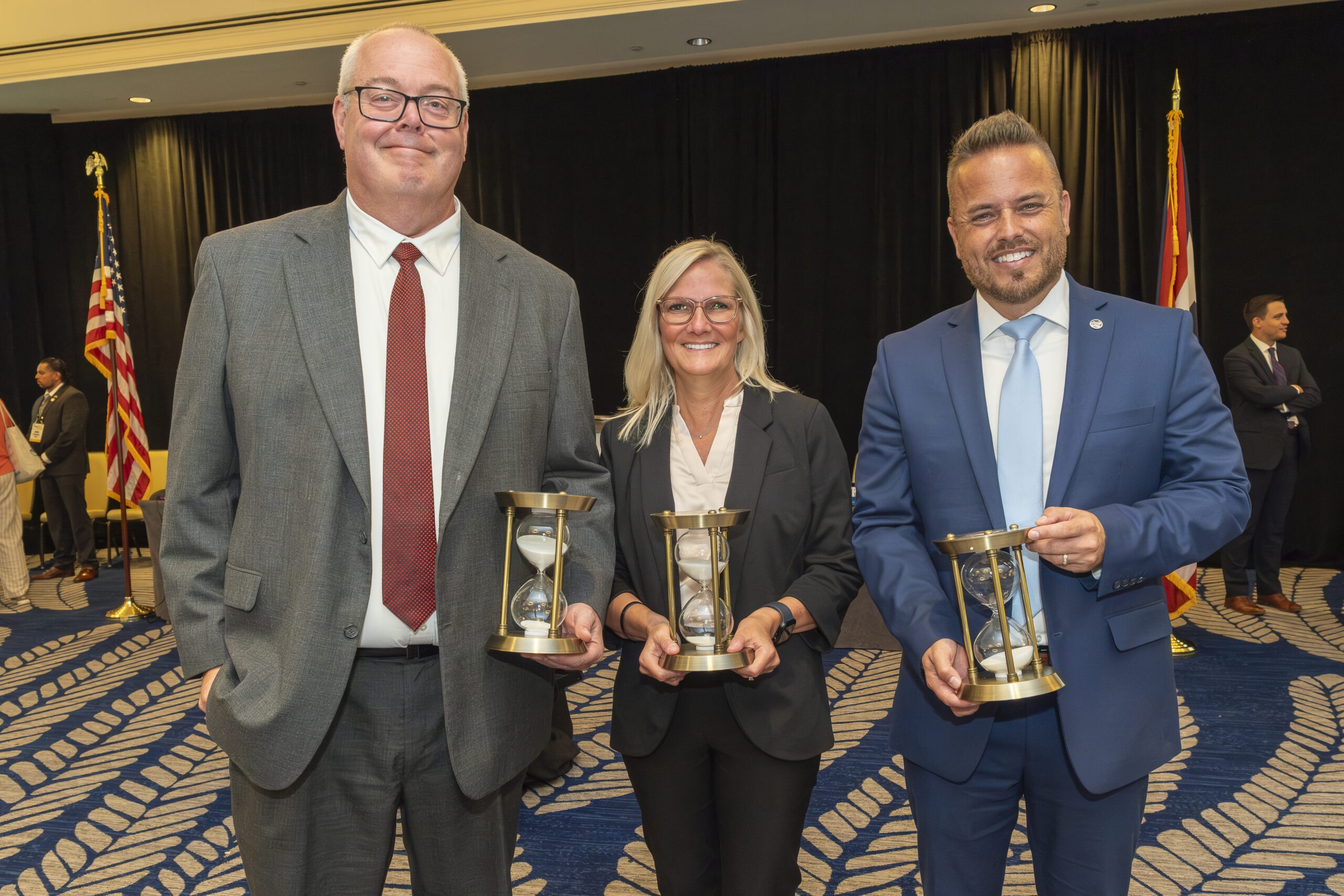
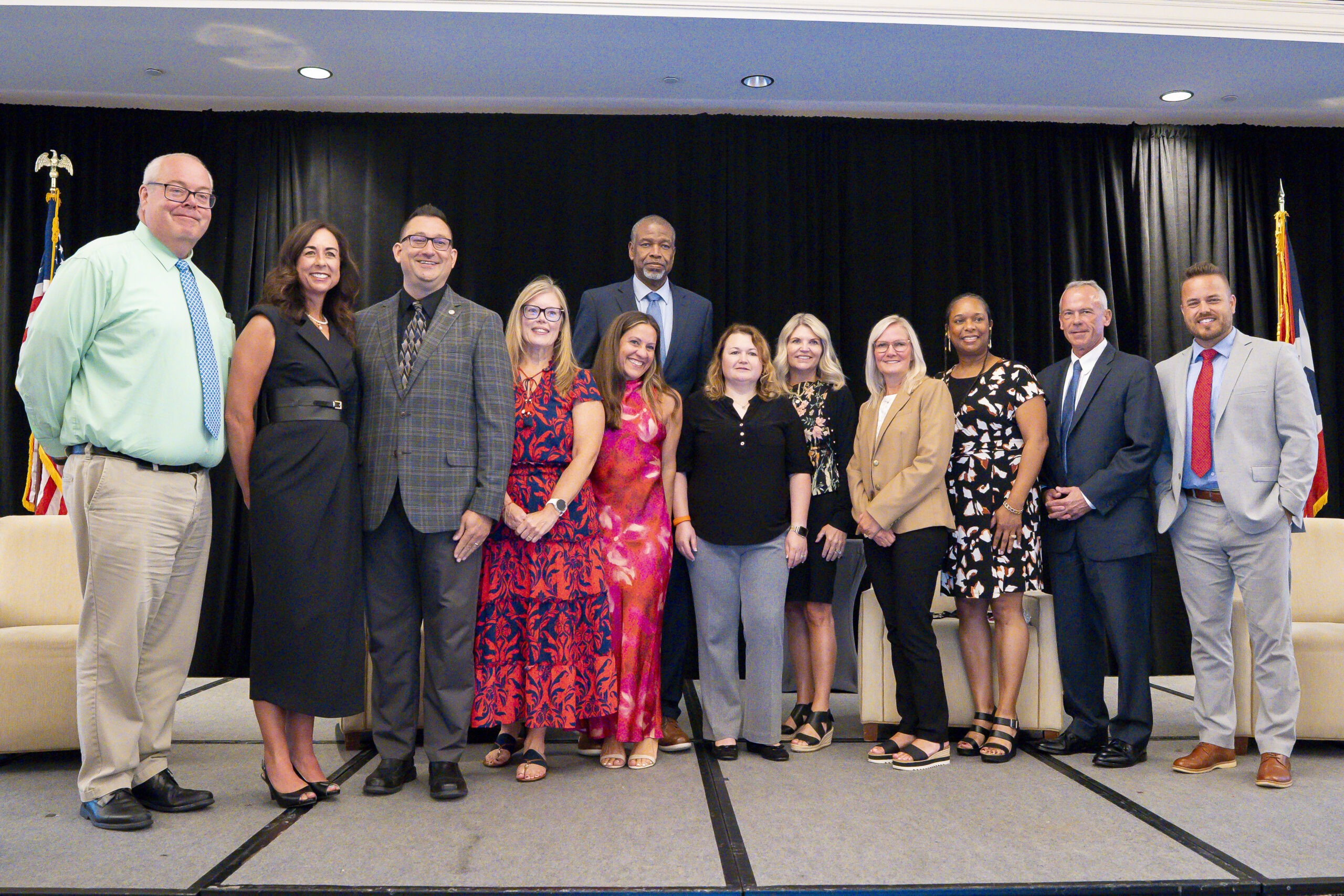
The meeting concluded with recognition of outstanding leadership and service through the presentation of the Commission’s annual awards and recognition:
Commissioner of North Dakota
Deputy Compact Administrator of Iowa
Ohio Department of Rehabilitation and Correction, Office of Victim Services
Massachusetts Compact Staff
Beyond the formal agenda, the Annual Business Meeting once again highlighted the value of bringing states together in person. Regional discussions, networking receptions, and informal conversations created opportunities for members to exchange ideas, strengthen partnerships, and learn from one another’s experiences. The 2025 Annual Business Meeting reflected a Commission that continues to evolve, collaborate, and lead together in support of public safety and effective interstate supervision nationwide.


As the Commission looks ahead, members will reconvene September 21-23, 2026, in Minneapolis, Minnesota, for the next Annual Business Meeting. Building on the momentum and accomplishments of 2025, the Minneapolis meeting will provide another opportunity for the Compact community to come together, address emerging challenges, and continue advancing the shared mission of effective interstate supervision and public safety.
ICAOS Education and Implementation Manager
Coming into this role after serving as a DCA, I thought I had a pretty good understanding of the amount of work happening behind the scenes to support states across the Compact. What I quickly realized this year is just how much coordination, problem-solving, and collaboration goes into helping states implement changes in a way that is practical and manageable in the real world.
One of the things I’ve enjoyed most about moving into this role is that I still get to stay connected to the work states are doing every day just from a different seat. As a DCA, I was focused primarily on how changes affected my own state operationally. Now, I have the opportunity to work with states across the country, hear different perspectives, and help identify ways we can better support implementation, training, and communication nationally. That broader view has been both eye-opening and incredibly rewarding.
A major focus this year has been making training and implementation support more accessible, practical, and responsive to the needs states are raising in real time. One of the most exciting additions was the launch of ICAOS social media channels in Fall 2025, which created new ways to quickly share updates, reminders, resources, and training information with the Compact community.
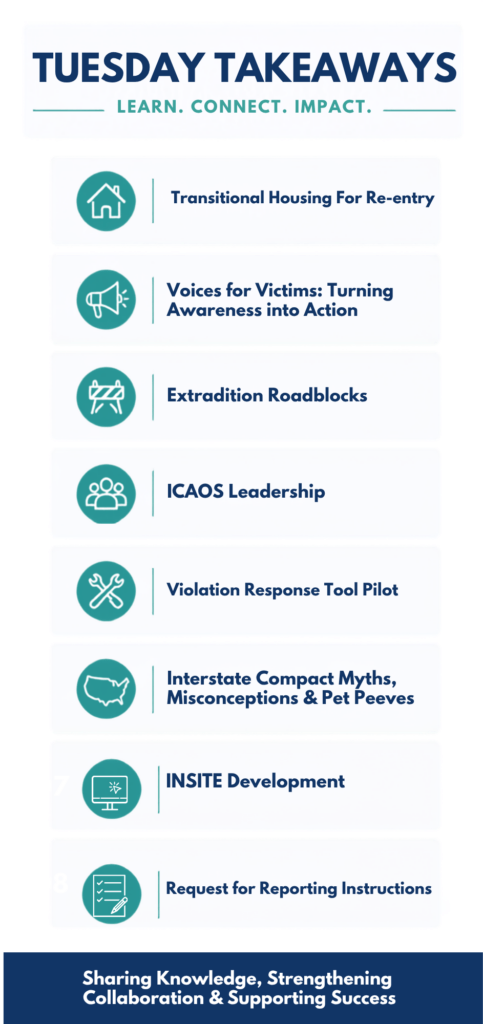
We also introduced Monthly Tuesday Takeaways, short focused sessions designed to reinforce key concepts and provide practical guidance on issues states are actively navigating. Those conversations have been a great opportunity to stay connected with members and create space for questions and discussion outside of larger trainings.
Much of my work this year also involved supporting implementation of the 2025 rule amendments and the pilot of the Violation Response Tool. Having previously sat in the DCA role myself, I understand how challenging implementation can sometimes feel when states are balancing policy, operations, staffing, and real-world supervision decisions all at once. Those discussions with states have been some of the most valuable parts of this role and have helped us identify questions, concerns, and training needs much earlier in the process.
Another major transition this year involved the launch of the Commission’s new Learning Management System. Anytime you move an entire training platform there are concerns about disruptions and user challenges, but the transition has gone remarkably well. The new LMS has already improved accessibility, streamlined training management, and positioned the Commission to continue expanding training opportunities moving forward.
Looking ahead, I’m especially excited about beginning work with the DCA Committee on development of a leadership program focused on supporting and developing future Compact leaders. Having served in the field myself, I know how important mentorship, institutional knowledge, and peer support can be in this work. Investing in leadership development is an investment in the long-term strength and success of the Compact itself.
While the role has certainly given me a different perspective on the work, one thing has not changed: the Compact continues to be built on the willingness of states to collaborate, ask questions, share ideas, and support one another. I’m grateful to still be part of that work just in a different way now.
Treasure and Finance Committee Chair
The Commission concluded Fiscal Year 2026 in a stronger financial position than originally projected. Capital assessment revenue collected for the INSITE implementation, combined with project expenditures that were lower than anticipated during the fiscal year, resulted in higher year-end reserve and investment balances. These funds will carry forward to support the remaining INSITE implementation costs in Fiscal Year 2027.
The charts illustrate the Commission’s revenues, expenses, and reserve and investment balances over the past five fiscal years, reflecting the Commission’s commitment to responsible financial stewardship and long-term investment in initiatives that support member states and strengthen the Compact.